Making Clothing-
Making fabric by hand is a tedious and labor-intensive process. The textile industry was the first to be mechanized – with thepowered loom – during the Industrial Revolution.
Different cultures have evolved various ways of creating clothes out of cloth. One approach simply involves draping the cloth. Examples of garments consisting of rectangles of cloth wrapped to fit include the dhoti for men and the sari for women in the Indian subcontinent, the Scottish kilt and the Javanese sarong. The clothes may simply be tied up, as is the case of the first two garments; or pins or belts are used to hold the garments in place, as in the case of the latter two. The cloth remains uncut, and people of various sizes or the same person at different sizes can wear the garment.
Another approach involves cutting and sewing the cloth, but using every bit of the cloth rectangle in constructing the clothing. The tailor may cut triangular pieces from one corner of the cloth, and then add them elsewhere as gussets. Traditional European patterns for men's shirts and women's chemises take this approach.
Modern European fashion treats cloth much less conservatively, typically cutting in such a way as to leave various odd-shaped cloth remnants. Industrial sewing operations sell these as waste; home sewers may turn them into quilts.
In the thousands of years that humans have spent constructing clothing, they have created an astonishing array of styles, many of which have been reconstructed from surviving garments, photos, paintings, mosaics, etc., as well as from written descriptions. Costume history serves as a source of inspiration to current fashion designers, as well as a topic ofprofessional interest to costumers constructing for plays, films, television, and historical reenactment.
Functions-
A primary function of clothing is to improve the comfort of the wearer by providing protection against the elements. Clothing provides protection from sunburn in warm weather, and protection from frostbite in cold weather. Shelter reduces the need for protective clothing. For example, coats, hats, gloves, and other superficial layers are normally removed when entering a warm home. Clothes also reduce risk during activities such as work or sport. Some clothing protects from specific environmentalhazards, such as insects, noxious chemicals, weather, weapons, and contact with abrasive substances. Conversely, clothing may protect the environment from the clothing wearer, as with doctors wearing medical scrubs.
Humans have shown extreme inventiveness in devising clothing solutions to environmental hazards. Examples include: space suits, air conditioned clothing,armor, diving suits, swimsuits, bee-keeper gear, motorcycle leathers, high-visibility clothing, and other pieces of protective clothing.
Clothing also performs a range of social and cultural functions. Clothing can be used to indicate social status and convey individual, occupational, and sexual differentiation. In many societies, norms about clothing reflect standards of modesty, religion, gender, and social status. They cover parts of the body that social norms require to be covered, act as a form of adornment, and provide an expression of personal taste and style.
Clothing has been made from a very wide variety of materials. Materials have ranged from leather and furs, to woven materials, to elaborate and exotic natural and synthetic fabrics. Not all body coverings are regarded as clothing. Articles carried rather than worn (such as purses), worn on a single part of the body and easily removed (scarves), worn purely for adornment (jewelry), or those that serve a function other than protection (eyeglasses), are normally considered accessoriesrather than clothing, as are footwear and hats. The distinction between clothing and protective equipment is not always clear-cut—since clothes designed to be fashionable often have protective value and clothes designed for function often consider fashion in their design.
Cultural Aspect-
In most cultures, gender differentiation of clothing is considered appropriate for men and women. The differences are in styles, colors and fabrics.
In Western societies, skirts, dresses and high-heeled shoes are usually seen as women's clothing, while neckties are usually seen as men's clothing. Trousers were once seen as exclusively male clothing, but are nowadays worn by both genders. Male clothes are often more practical (that is, they can function well under a wide variety of situations), but a wider range of clothing styles are available for females. Males are typically allowed to bare their chests in a greater variety of public places. It is generally acceptable for a woman to wear traditionally male clothing, while the converse is unusual.
In some cultures, sumptuary laws regulate what men and women are required to wear. Islam requires women to wear more modest forms of attire, usually hijab. What qualifies as "modest" varies in different Muslim societies. However, women are usually required to cover more of their bodies than men are. Articles of clothing Muslim women wear for modesty range from the headscarf to the burqa.
Men may sometimes choose to wear men's skirts such as togas or kilts, especially on ceremonial occasions. Such garments were (in previous times) often worn as normal daily clothing by men. Women's clothing tends to be worn to attract the attention of men.
Social Status-
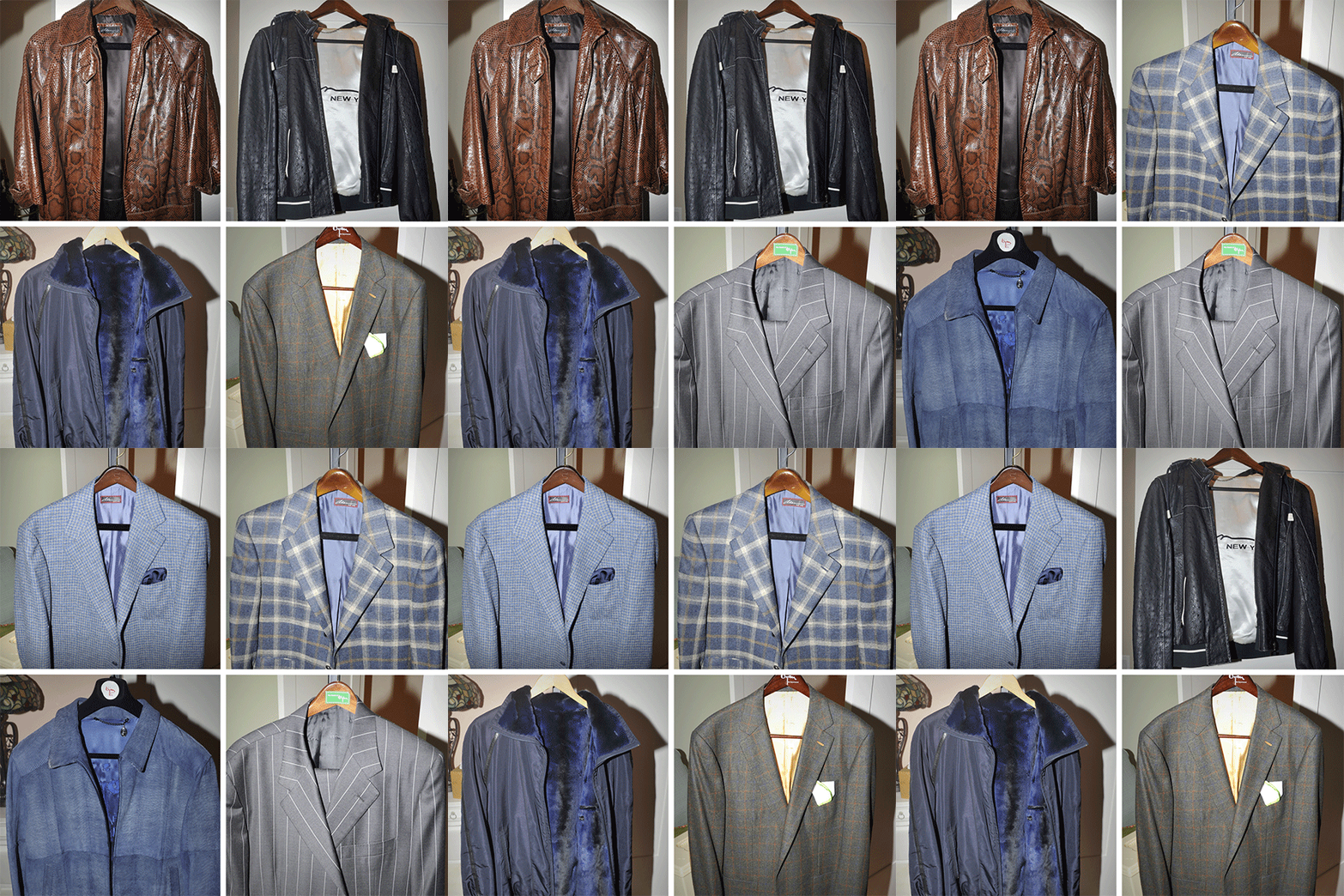
In some societies, clothing may be used to indicate rank or status. In ancient Rome, for example, only senators could wear garments dyed with Tyrian purple. In traditionalHawaiian society, only high-ranking chiefs could wear feather cloaks and palaoa, or carved whale teeth. Under the TravancoreKingdom of Kerala, (India), lower castewomen had to pay a tax for the right to cover their upper body. In China, before establishment of the republic, only the emperor could wear yellow. History provides many examples of elaborate sumptuary lawsthat regulated what people could wear. In societies without such laws, which includes most modern societies, social status is instead signaled by the purchase of rare or luxury items that are limited by cost to those with wealth or status. In addition, peer pressure influences clothing choice.
Religion-
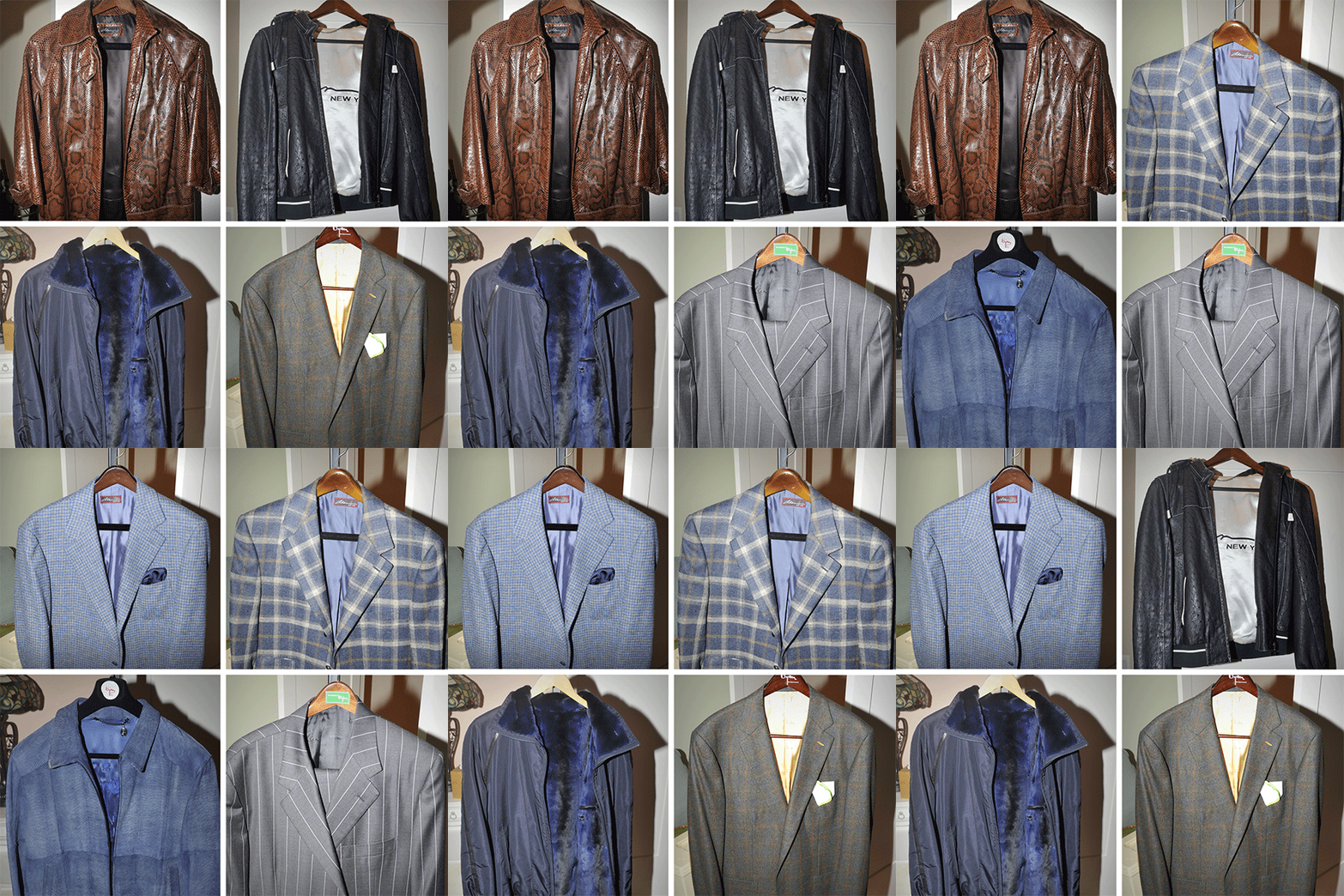
Religious clothing might be considered a special case of occupational clothing. Sometimes it is worn only during the performance of religious ceremonies. However, it may also be worn everyday as a marker for special religious status. For example, Jains and Muslim men wear unstitched cloth pieces when performing religious ceremonies. The unstitched cloth signifies unified and complete devotion to the task at hand, with no digression. Sikhs wear a turban as it is a part of their religion.
Most Abrahamic religions prohibit cross-dressing. The cleanliness of religious dresses in Eastern religions like Hinduism, Sikhism, Buddhism, Islam and Jainism is of paramount importance, since it indicates purity.
Clothing figures prominently in the Bible where it appears in numerous contexts, the more prominent ones being: the story of Adam and Eve who made coverings for themselves out of fig leaves, Joseph's cloak, Judah and Tamar, Mordecai andEsther. Furthermore the priests officiating in the Temple had very specific garments, the lack of which made one liable to death.
In Islamic traditions, women are required to wear long, loose, non-transparent outer dress when stepping out of the home. This dress code was comprehensive (for all women regardless of status).
Future Trends-
The world of clothing is always changing, as new cultural influences meet technological innovations. Researchers in scientific labs have been developing prototypes for fabrics that can serve functional purposes well beyond their traditional roles, for example, clothes that can automatically adjust their temperature, repel bullets, project images, and generate electricity. The field of wearable technology covers clothing which includes electronic elements.
Researchers are working on creating textiles with designer bacteria that survive off of "dead" skin and sweat reducing the need to wash clothes. Such bacteria could also be used to create bio luminescent fabrics. In 2014, British scientists created a material claimed to be the 'blackest' ever invented - made of carbon nanotubes, the material absorbs 99.965% of all incident light which hits it, although this is expected to have more of a military than a fashion purpose. Some practical advances already available to consumers are bullet-resistant garments made with kevlar and stain-resistant fabrics coated with chemical mixtures that reduce the absorption of liquids.


Working Condition-
Though mechanization transformed most aspects of human industry by the mid-20th century, garment workers have continued to labor under challenging conditions that demand repetitive manual labor. Mass-produced clothing is often made in what are considered by some to be sweatshops, typified by long work hours, lack of benefits, and lack of worker representation. While most examples of such conditions are found in developing countries, clothes made in industrialized nations may also be manufactured similarly, often staffed by undocumented immigrants.
Coalitions of NGOs, designers (Katharine Hamnett, American Apparel, Veja,Quiksilver, eVocal, Edun,...) and campaign groups like the Clean Clothes Campaign (CCC) have sought to improve these conditions as much as possible by sponsoring awareness-raising events, which draw the attention of both the media and the general public to the workers.
Outsourcing production to low wage countries like Bangladesh, China, India andSri Lanka became possible when the Multi Fibre Agreement (MFA) was abolished. The MFA, which placed quotas on textiles imports, was deemed a protectionist measure. Globalization is often quoted as the single most contributing factor to the poor working conditions of garment workers. Although many countries recognize treaties like the International Labor Organization, which attempt to set standards for worker safety and rights, many countries have made exceptions to certain parts of the treaties or failed to thoroughly enforce them. India for example has not ratified sections 87 and 92 of the treaty.


Clothing Fashion-
Early Western travelers, whether to Persia, Turkey, India, or China, would frequently remark on the absence of change in fashion there. Observers from these other cultures commented on the unseemly pace of Western fashion, which many felt suggested an instability and a lack of order in Western culture. The Japanese Shogun's secretary boasted (not completely accurately) to a Spanish visitor in 1609 that Japanese clothing had not changed in over a thousand years.However, there is considerable evidence in Ming China of rapidly changing fashions in Chinese clothing. Changes in costume often took place at times of economic or social change, as occurred in ancient Rome and the medieval Caliphate, followed by a long period without major changes. In 8th-century Moorish Spain the musicianZiryab introduced to Cordoba sophisticated clothing-styles based on seasonal and daily fashions from his native Baghdad, modified by his own inspiration. Similar changes in fashion occurred in the 11th century in the Middle East following the arrival of the Turks, who introduced clothing styles from Central Asia and the Far East.The beginning in Europe of continual and increasingly rapid change in clothing styles can be fairly reliably dated. Historians, including James Laver and Fernand Braudel, date the start of Western fashion in clothing to the middle of the 14th century. The most dramatic early change in fashion was a sudden drastic shortening and tightening of the male over-garment from calf-length to barely covering the buttocks, sometimes accompanied with stuffing in the chest to make it look bigger. This created the distinctive Western outline of a tailored top worn over leggings or trousers.
The pace of change accelerated considerably in the following century, and women and men's fashion, especially in the dressing and adorning of the hair, became equally complex. Art historians are therefore able to use fashion with confidence and precision to date images, often to within five years, particularly in the case of images from the 15th century. Initially, changes in fashion led to a fragmentation across the upper classes of Europe of what had previously been a very similar style of dressing and the subsequent development of distinctive national styles. These national styles remained very different until a counter-movement in the 17th to 18th centuries imposed similar styles once again, mostly originating from Ancien Régime France. Though the rich usually led fashion, the increasing affluence of early modern Europe led to thebourgeoisie and even peasants following trends at a distance, but still uncomfortably close for the elites – a factor that Fernand Braudel regards as one of the main motors of changing fashion.
Modern Westerners have a wide number of choices available in the selection of their clothes. What a person chooses to wear can reflect his or her personality or interests. When people who have high cultural status start to wear new or different clothes, a fashion trend may start. People who like or respect these people become influenced by their personal style and begin wearing similarly styled clothes. Fashions may vary considerably within a society according to age, social class,generation, occupation, and geography and may also vary over time. If an older person dresses according to the fashion young people use, he or she may look ridiculous in the eyes of both young and older people. The terms fashionista andfashion victim refer to someone who slavishly follows current fashions.
One can regard the system of sporting various fashions as a fashion language incorporating various fashion statements using a grammar of fashion. (Compare some of the work of Roland Barthes.)
In recent years, Asian fashion has become increasingly significant in local and global markets. Countries such as China, Japan, India, and Pakistan have traditionally had large textile industries, which have often been drawn upon by Western designers, but now Asian clothing styles are also gaining influence based on their own ideas.